By all appearances, this new design should not work. It takes the leather-bound codes of biker subculture and collides them with the flowing drapery of South Asian tradition. Yet on the body, it holds together with conviction. What emerges is a fresh, assured statement: a vision of fashion that is both rooted and forward-looking, protective and poetic.
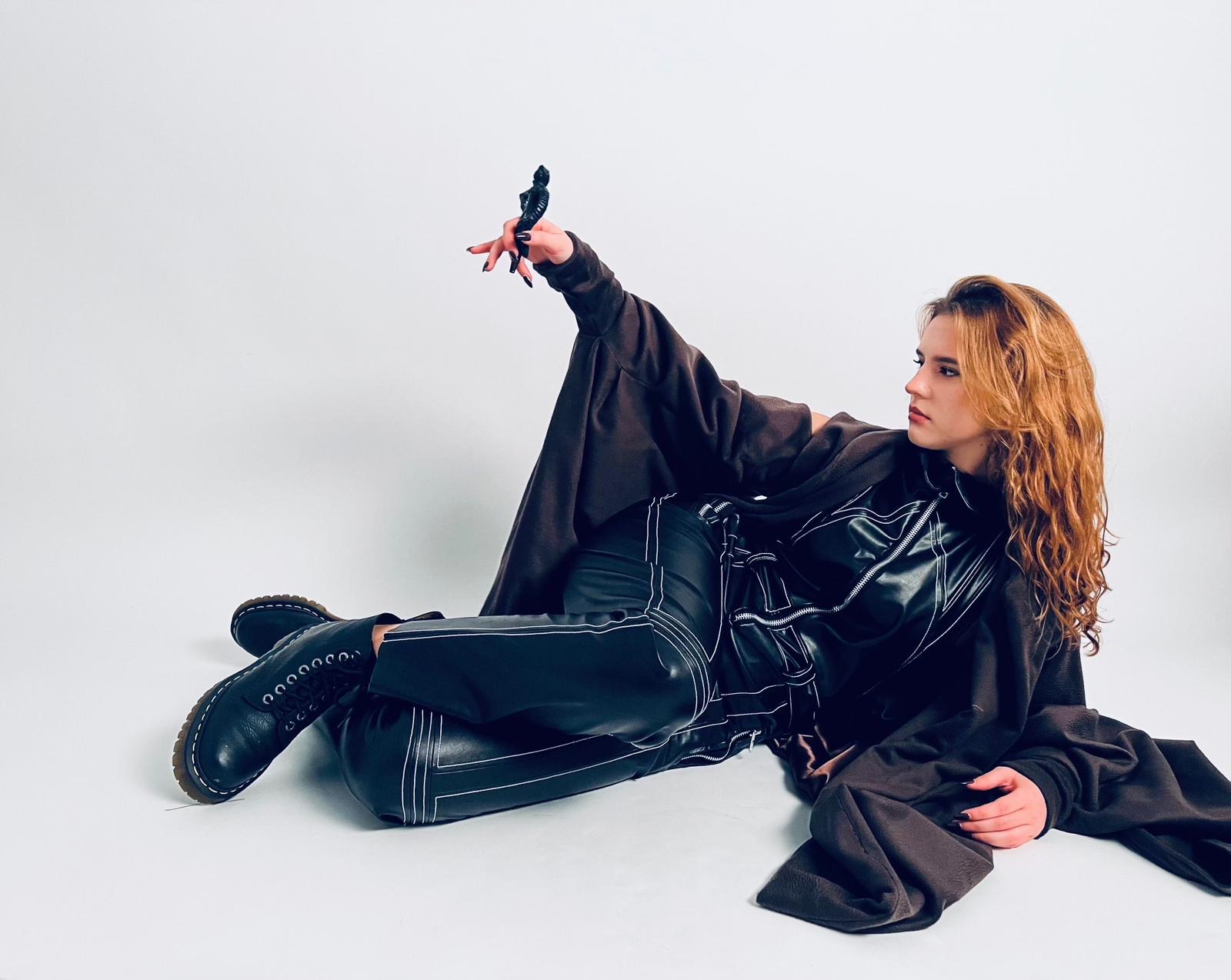
At its core lies a sharply constructed biker suit in black leather. Its surface is broken by clean grids of contrast top-stitching and metal zips that catch the light. The precision of the tailoring makes the leather act like a sculptural skin, firm, strong, and unapologetic. It recalls biker culture’s armour, but with the finish and line work of couture. The design does not soften the leather; instead, it highlights its weight and geometry, insisting on presence.
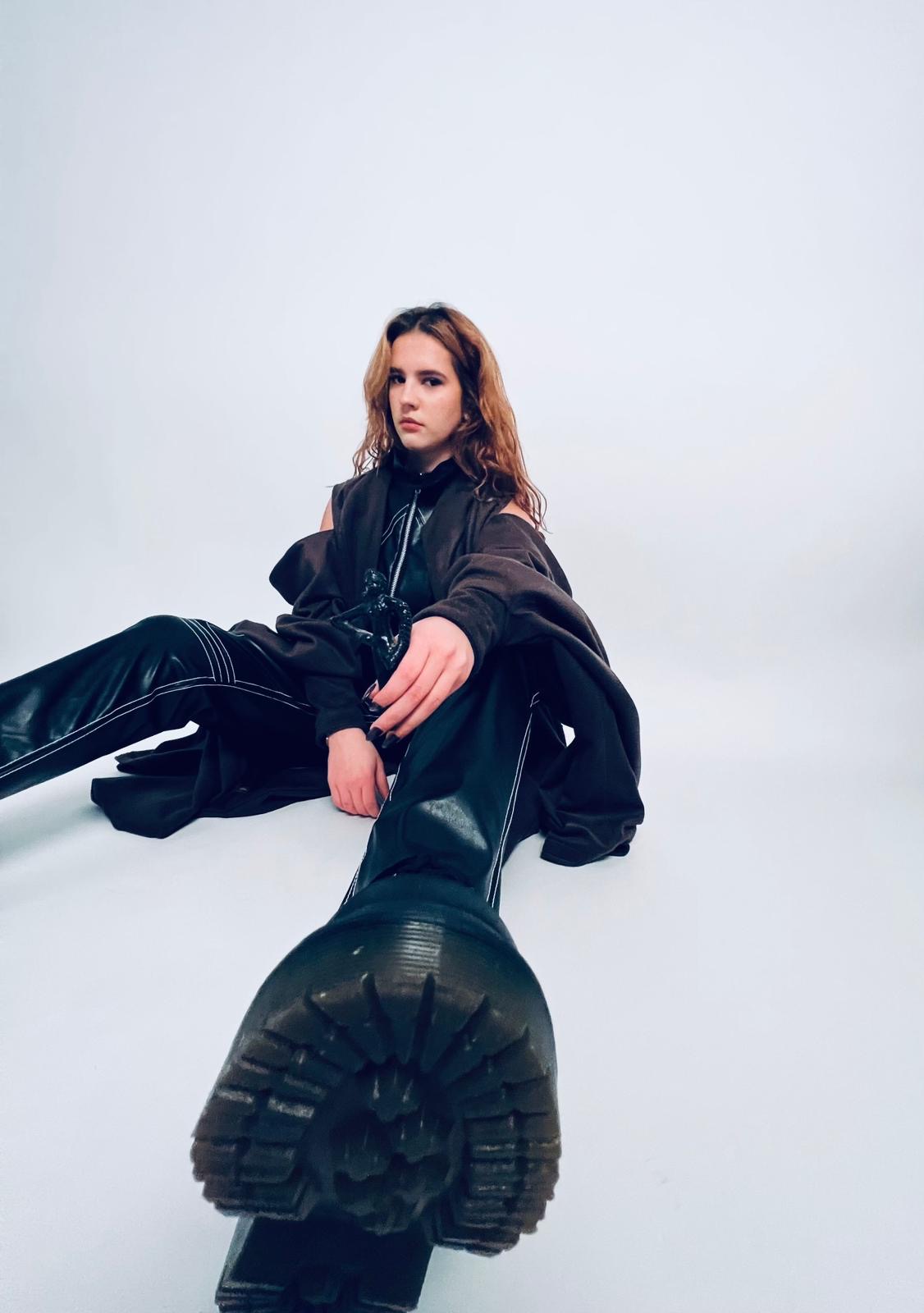
The coat that rests on top brings an entirely different mood. Cut in deep brown wool, it is designed with cut-outs at the shoulder and long, draped sleeves that cascade in panels. In motion, the coat refuses to stay still: it spreads when reclining, folds when sitting upright, and trails when walking. The gesture recalls the everyday presence of a dupatta or chaadar, fluid, adaptable, endlessly expressive. This dialogue between rigid leather and shifting wool creates a tension that defines the look: armour and air, road and home.
The accessories and styling reinforce the vision. Heavy black boots with lug soles ground the look, amplifying the biker influence while anchoring the sweeping wool. Hair and make-up are kept stripped back; nails painted dark give a discreet edge. In one hand, the model holds a figurine—part talisman, part sculpture—that mirrors the idea of clothing as living form. Nothing here is accidental; every element contributes to the central narrative of strength meeting softness.
What makes this design significant is its cultural sincerity. Many contemporary collections borrow heritage as surface decoration. Here, drapery is not printed or symbolised but built into the architecture of the garment itself. The coat speaks a language of openness, layering, and movement drawn directly from Pakistani dress codes. The biker suit honours its global subcultural roots with equal integrity. Together, they create a hybrid that feels neither borrowed nor imitative but entirely original.
There are questions of practicality. How heavy the leather would feel in Karachi’s climate, or how the draped sleeves might overwhelm in daily wear, but these are part of the experimental space in which true innovation lives. Fashion progresses through designers willing to test boundaries, and this work does so with clarity.
Beyond novelty, what lingers is a sense of poise. This is not a fashion chasing trend. It is an independent design language, clear in its contrasts yet harmonious in effect. The garments hold power in photographs, but more importantly, they suggest life in motion: walking, striding, arriving. They do what good fashion should, transform the wearer while communicating an idea bigger than the clothes themselves.For Pakistan’s fashion landscape, this marks an important step. This innovative design by Anzal proves that local drapery traditions can meet global subcultures in a way that is intelligent, respectful, and inventive. It also places the designer in conversation with international audiences, showing a practice that is experimental but rooted, bold but thoughtful. It is precisely the kind of work that signals future promise: a designer able to merge cultures, materials, and moods into a language that feels necessary for today.